The Treatment That Took Over Seoul Medspas — Now Available Without The $400 Session.

The Treatment That Took Over Seoul Medspas — Now Available Without The $400 Session.

Chapter One

The Patient Who Made Me Question My Own Practice

Rebecca walked into my clinic on a Thursday morning with a printed estimate in her hand and tears already starting in her eyes. She was 47, had lost 64 pounds on Mounjaro over fourteen months, and hadn't looked at herself in a full-length mirror since November.

"I've spent $4,800 trying to fix this," she said before I'd even asked. She pulled out her phone and showed me a Notes app list: tear-trough filler ($2,400), cheek filler ($1,800), and three different hyaluronic acid serums. "My last dermatologist said I should just keep getting filler refills. Every six months. Forever."

Rebecca in the clinic exam room, showing visible mid-face volume loss
Rebecca had spent $4,800 on filler. Her face was still hollow.

Her face was still hollow. The filler had stretched her skin without restoring what was actually missing underneath.

"He said I was being unrealistic," she told me. "But I've done everything right. So why does my face still look empty?"

That question stayed with me for months. Why were we, as dermatologists, refilling the same empty space over and over, while our patients kept coming back with the same hollow face?
Chapter Two

The Investigation That Exposed My Industry

I spent the next eight months reviewing patient files, interviewing dermatologists in Seoul, Tokyo, and Milan, and studying the latest peer-reviewed research on mid-face volume loss. What I found was disturbing.

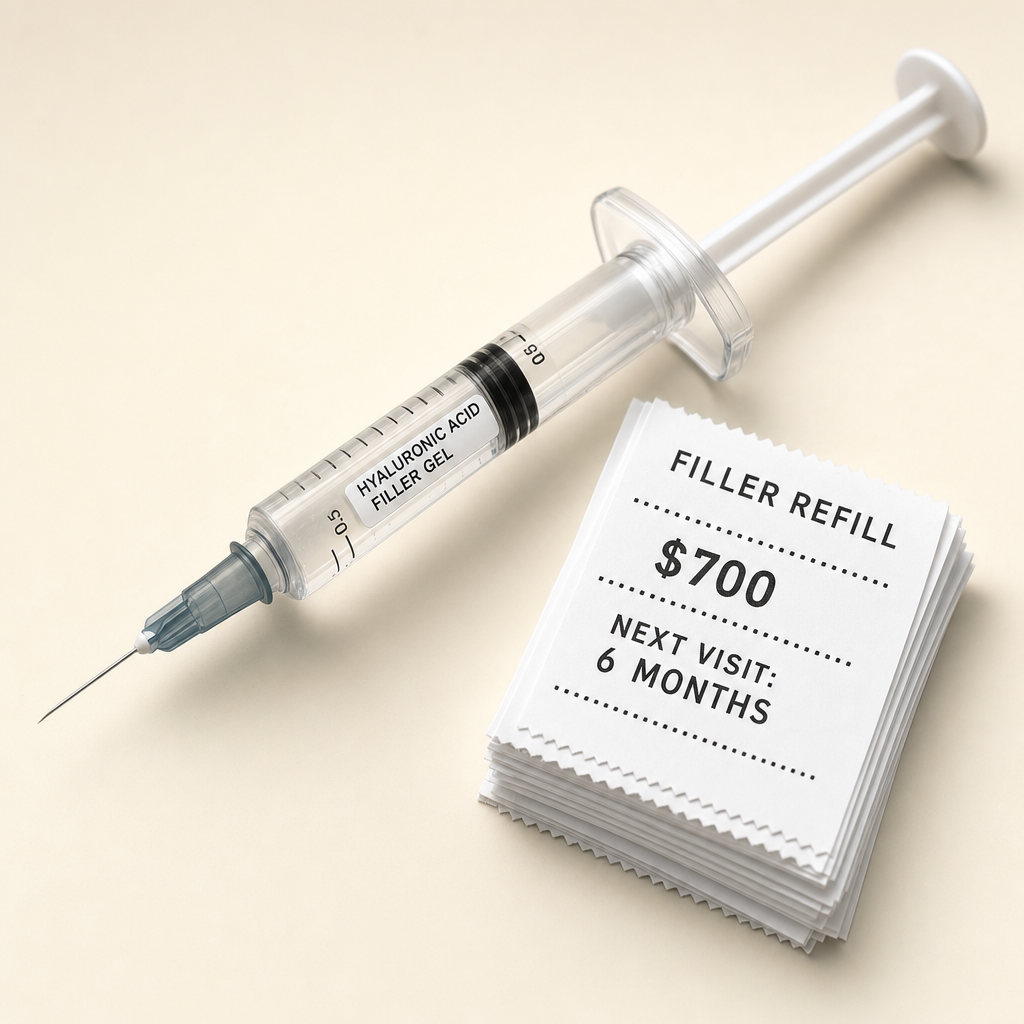
We weren't treating volume loss. We were renting it back to our patients for $700 a syringe.

The Western dermatology community had approached hollow face as a fill-in problem. Inject gel. Refill the space. Send them home. Bill them again in six months. But new research revealed something deeper. Hollow face isn't really a filler problem. It's a structural problem. When you lose weight rapidly or your hormones shift in perimenopause, the fibroblasts in your dermis stop producing collagen, and the adipocytes in your subcutaneous layer deflate.

Filler does nothing to fix either. It just hides the symptom while the cause keeps worsening.

Rebecca looking out the clinic window
"I finally have my face back. I thought I was supposed to live like this forever." — Rebecca
This breakthrough moment changed everything. The proof was undeniable: by addressing the structural cause instead of refilling the symptom, we could achieve results conventional filler couldn't deliver.

What I Discovered Changed My Practice Forever

After reviewing hundreds of failed cases, I uncovered 5 fundamental mistakes that 9 out of 10 dermatologists make with hollow face.

The 5 Critical Mistakes We Were All Making
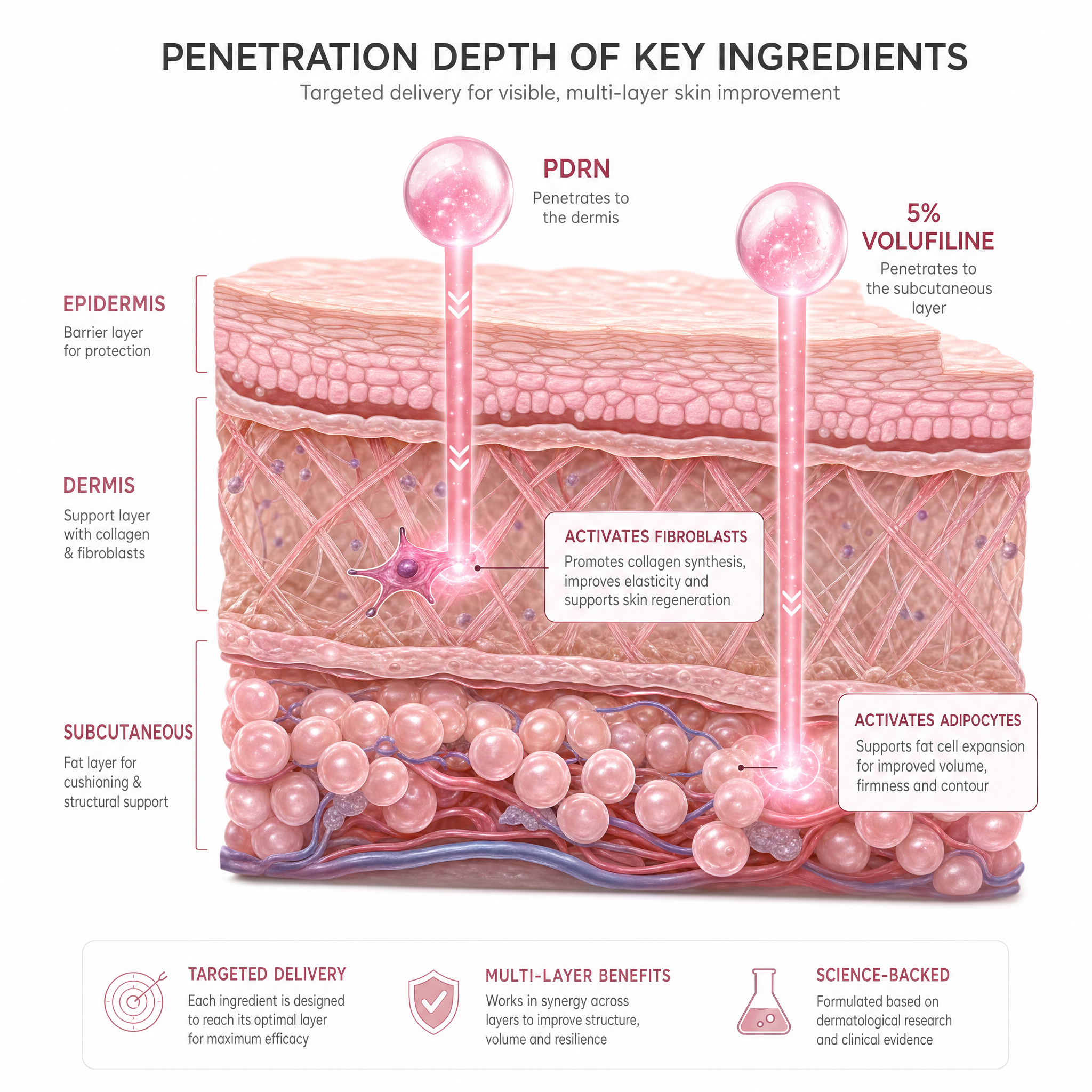
Cross-section diagram showing skin layers and where volume loss occurs
Surface-only treatment illustration
Mistake 01
The Surface Mistake
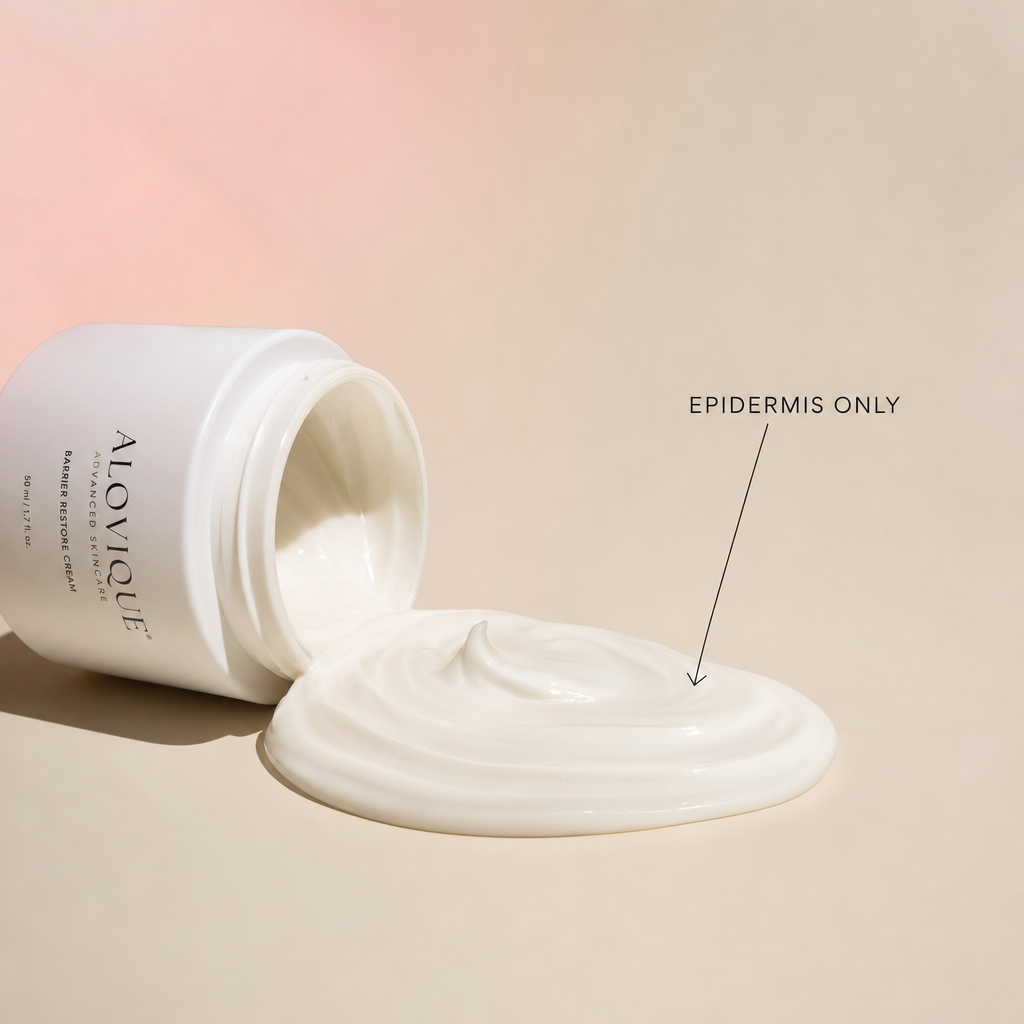
Most products target the epidermis (the top layer). But hollow face is a deep-layer problem. Surface treatments hydrate but never reach where volume is actually lost.
The filler refill trap, endless invoicing
Mistake 02
The Filler Trap
Filler refills empty space with gel. It does nothing to restore the fibroblasts that stopped working or the fat layer that deflated. You'll need refills forever, and your skin stretches.
One ingredient cannot serve two skin layers
Mistake 03
The Single-Ingredient Mistake
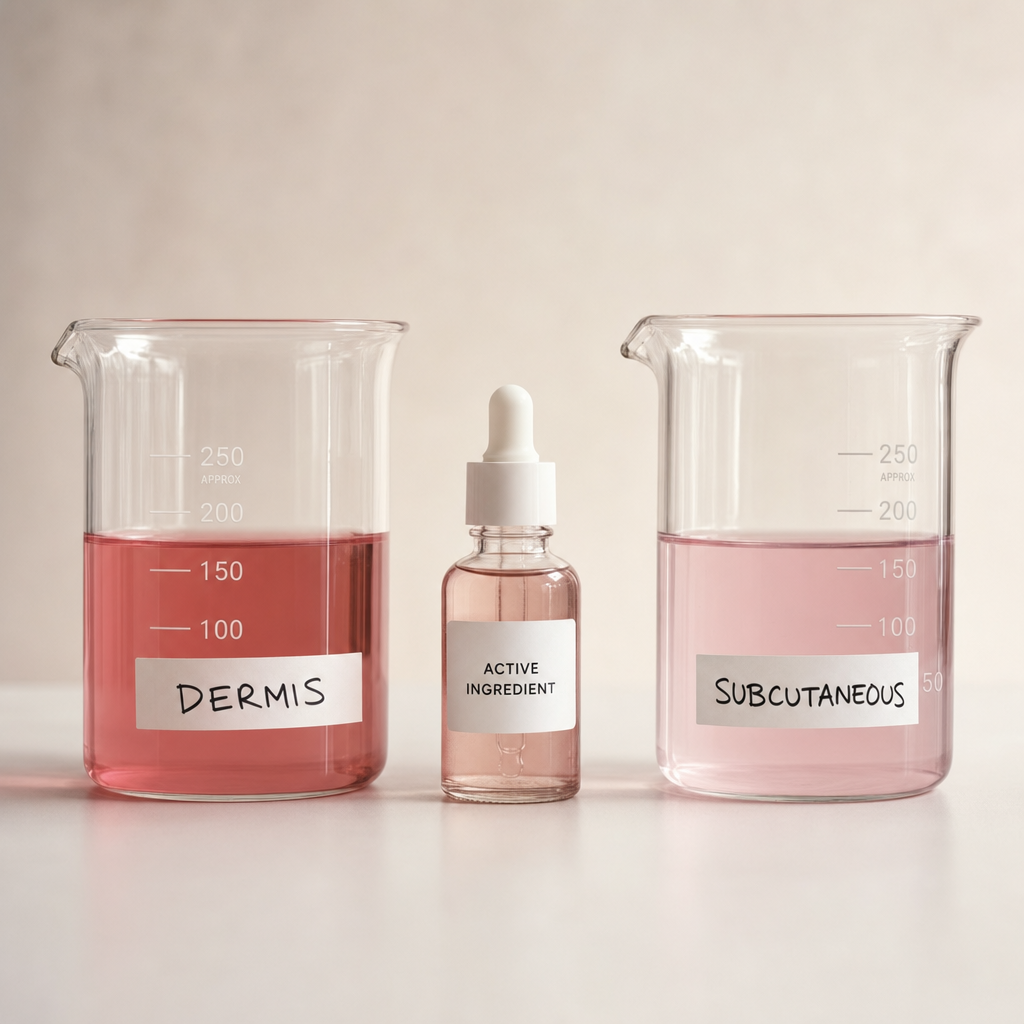
Volume loss happens at two depths simultaneously: the dermis (where collagen lives) and the subcutaneous layer (where adipocytes live). One active ingredient cannot reach both.
Higher percentages do not equal better results
Mistake 04
The Concentration Fallacy
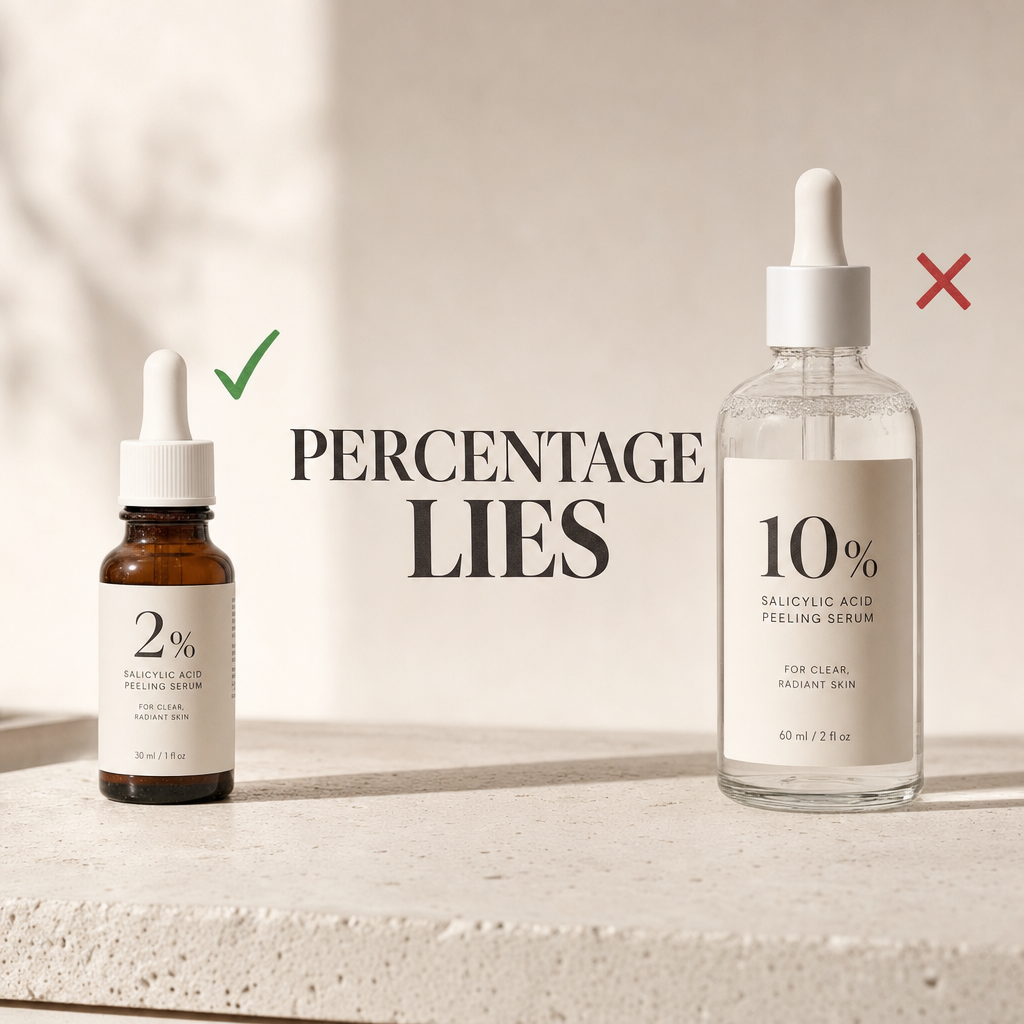
Higher percentages do not equal better results. PDRN works through receptor signaling, not concentration. 2% of the right molecular weight outperforms 10% of the wrong one.
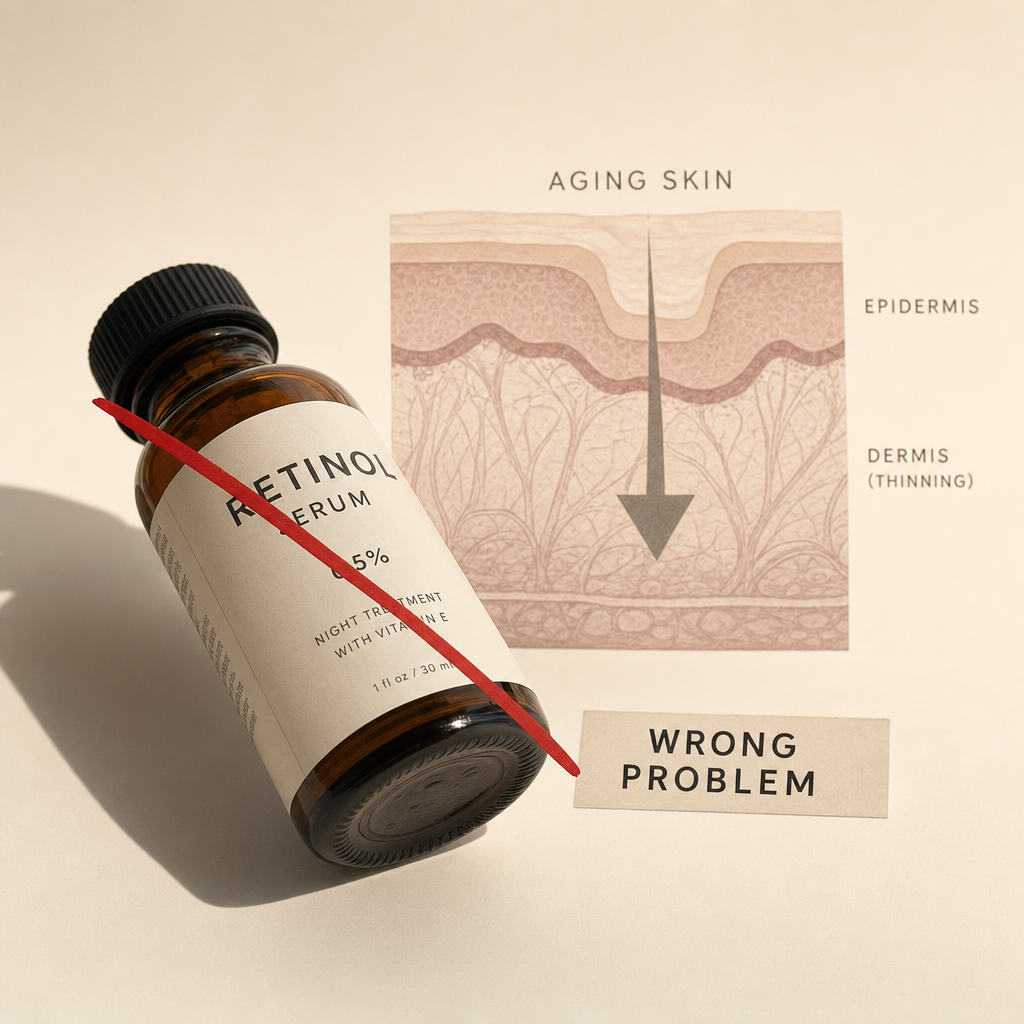
Retinol treats wrinkles, not volume loss
Mistake 05
Treating Wrinkles Instead of Volume
Retinol fights wrinkles by triggering cell turnover. But hollow face isn't wrinkled skin. It's empty skin. Retinol can actually make hollow face look worse by thinning the dermis further.

The Only Ingredients With Peer-Reviewed Proof For Volume Restoration
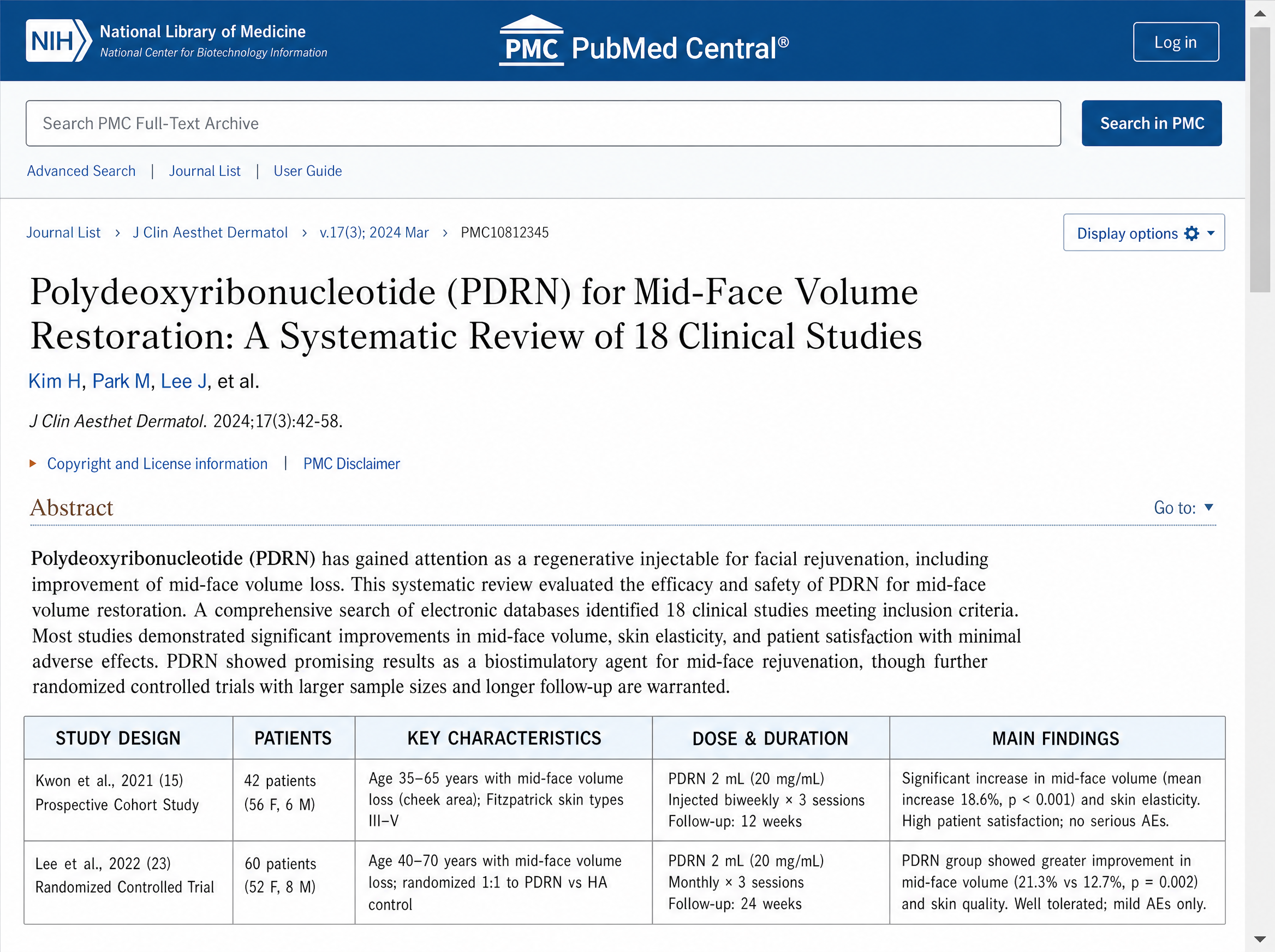
"Every cream, every filler refill, every $300 serum I prescribed had failed because they skipped what only one combination delivers: PDRN paired with 5% Volufiline, working together at two depths simultaneously. These two compounds restart collagen synthesis at the dermal layer and reactivate fat cells at the subcutaneous layer. Aumora is the first topical formulation built around this combination, and the only one I've found that addresses hollow face from both layers at once."
PubMed Central research paper on PDRN for mid-face volume restoration

The Breakthrough That Changes Everything

Working with biochemists at the Seoul Aesthetic Institute and frustrated by my patients' repeated failures with filler, we developed what we now call the Bilayer Restoration Protocol.

Instead of refilling empty space with gel that stretches the skin, we deliver two clinically validated compounds that rebuild structure at both depths where volume was actually lost.

The network works together for an 8-week window. Long enough to rebuild the underlying architecture. Instead of refilling what emptied, we rebuild what created the emptiness.
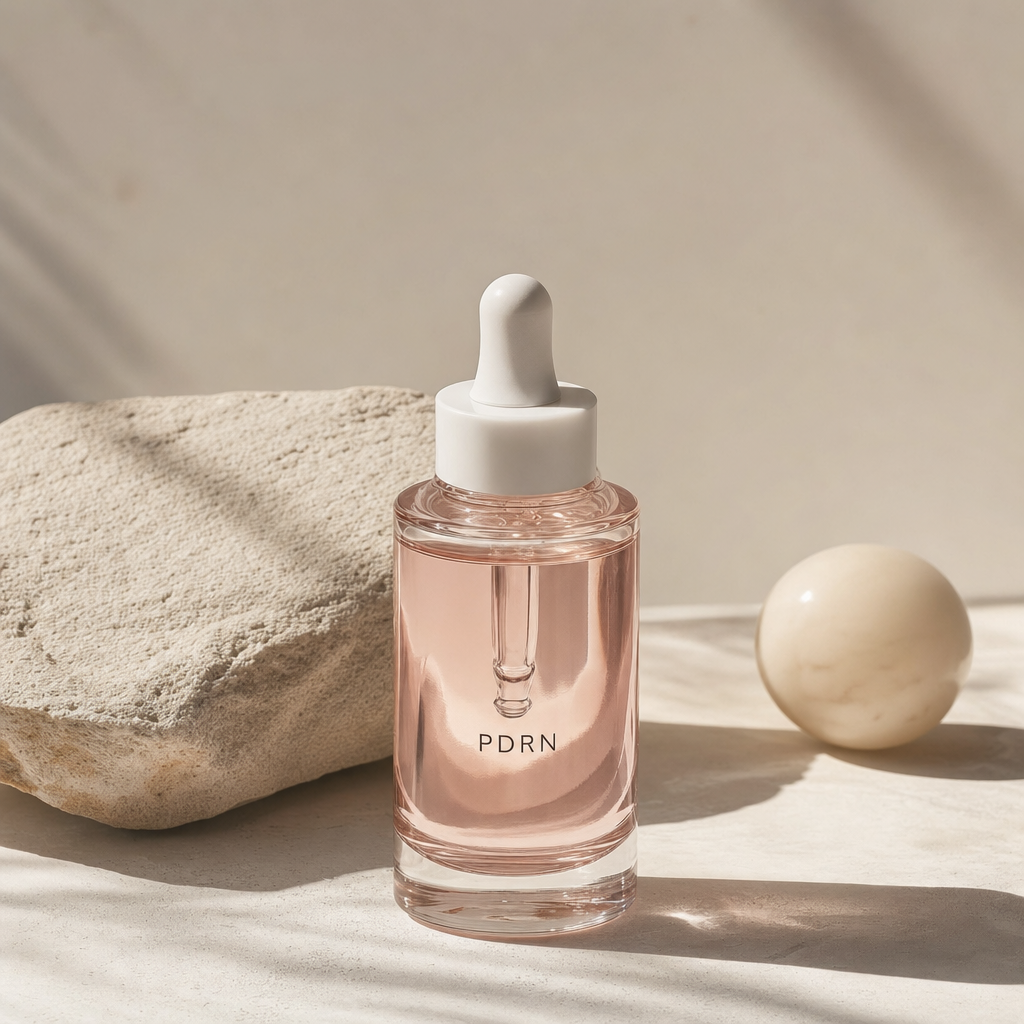

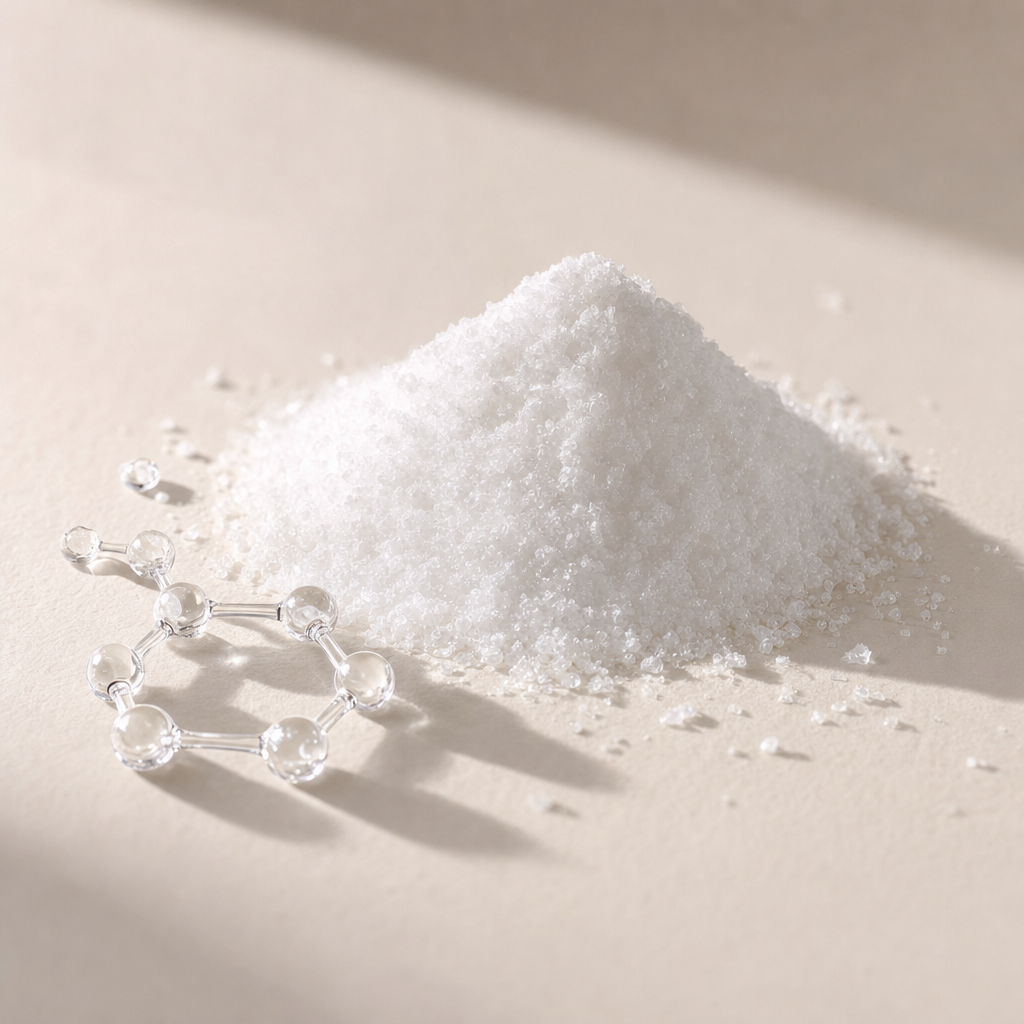
PDRN salmon-derived liposomal
PDRN (Salmon-derived, liposomal)
2%
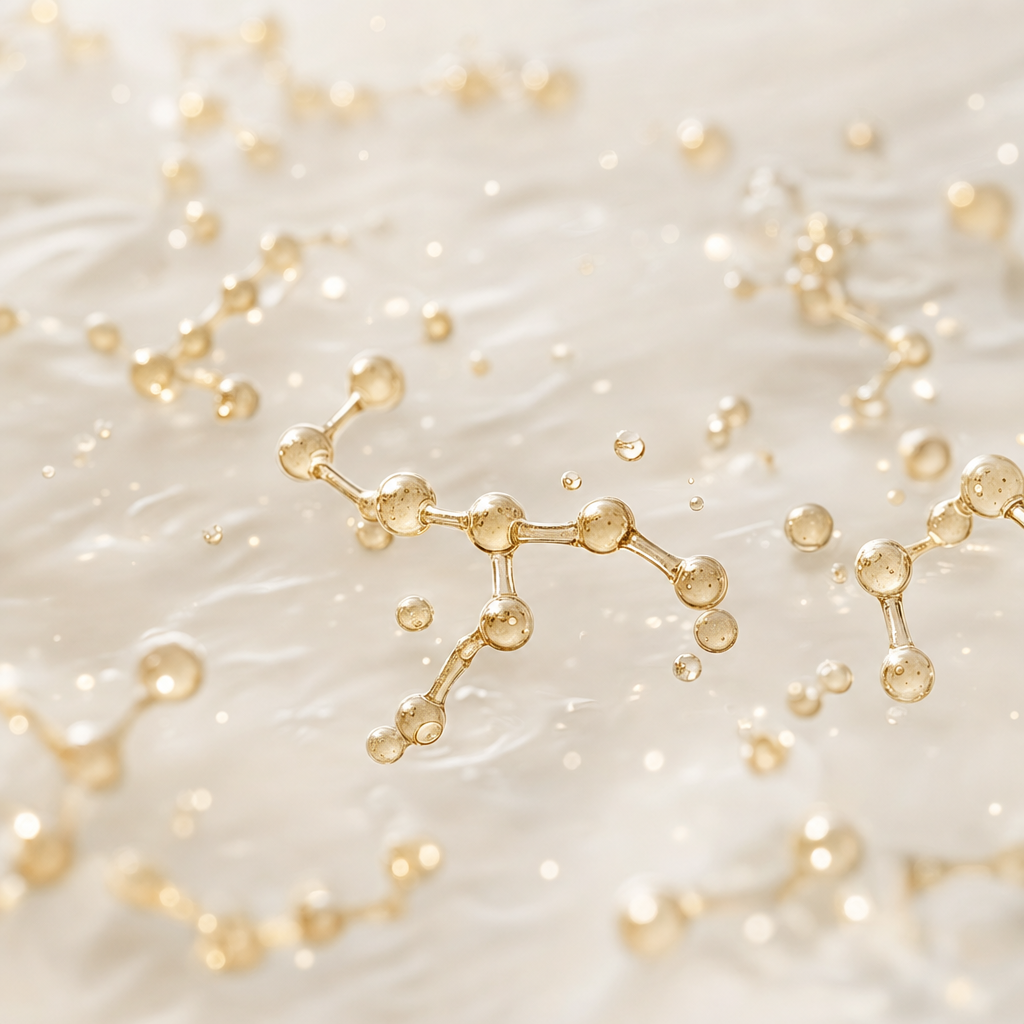
Volufiline Anemarrhena extract
Volufiline (Anemarrhena extract)
5%
Niacinamide
Niacinamide
4%
Peptide complex
Peptide Complex
3%
Hyaluronic acid
Hyaluronic Acid
1.5%
Squalane
Squalane
8%
See The Clinical Formula
Current batch is running low. Restock arrives in 4-6 weeks.

Rebecca's 8-Week Transformation
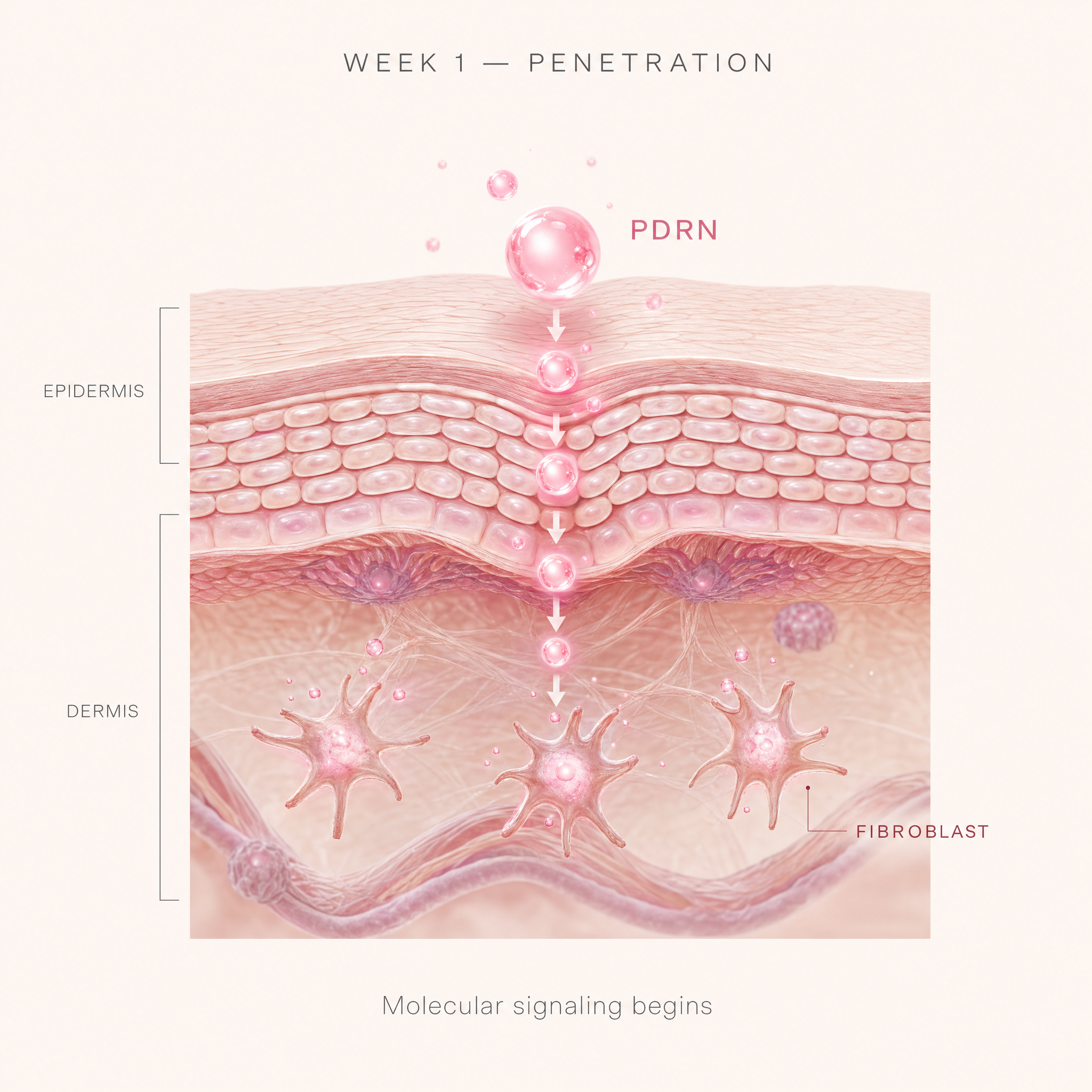
The patient who started this journey became our first documented case.
Week 1 mechanism diagram
Week 01 · Penetration

The biological switch flips

Liposomal PDRN crosses the skin barrier and reaches the dermis. Fibroblasts begin receiving the A2A receptor signal. Nothing visible on the surface yet, but the protocol is activating underneath.
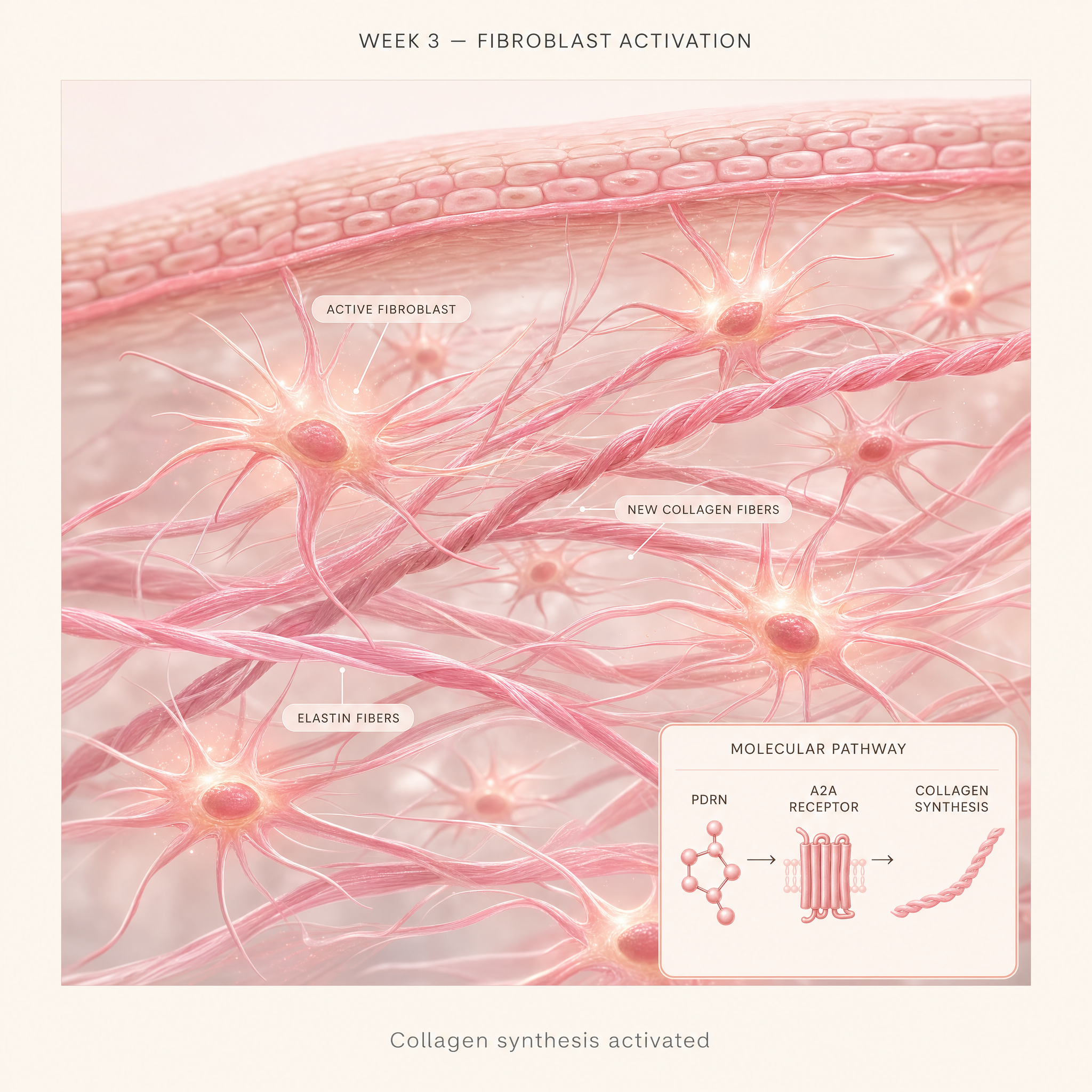
Week 3 mechanism diagram
Week 03 · Activation

New collagen production begins

Fibroblasts actively synthesize fresh collagen, elastin, and VEGF. New protein fibers weave into the dermal matrix. Skin density measurably increases. The first visible softening appears.
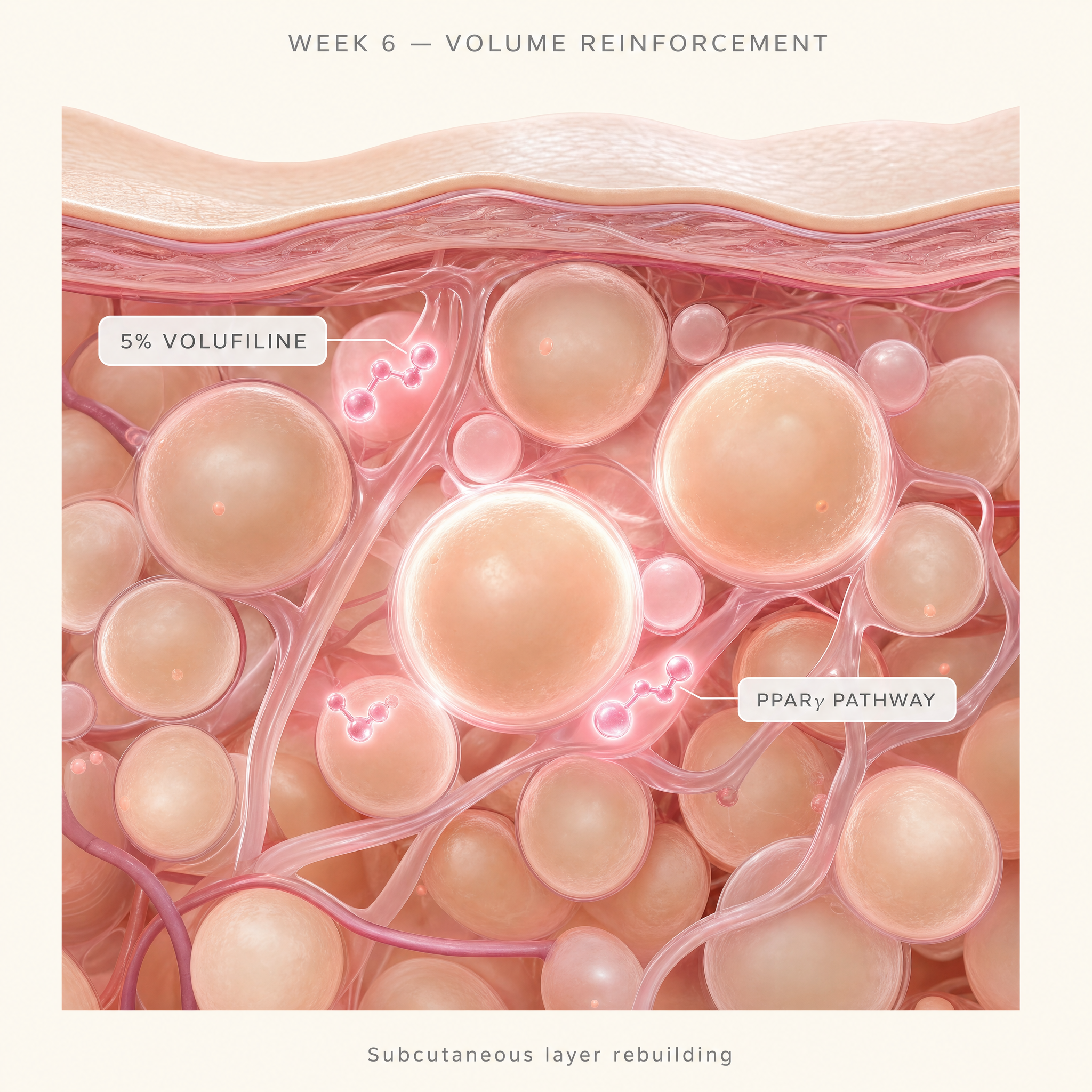
Week 6 mechanism diagram
Week 06 · Volume

The cushion comes back

5% Volufiline activates the PPARγ pathway in the subcutaneous layer. Adipocytes expand and reinforce the cushion beneath your cheeks. The lift becomes visible in photos.
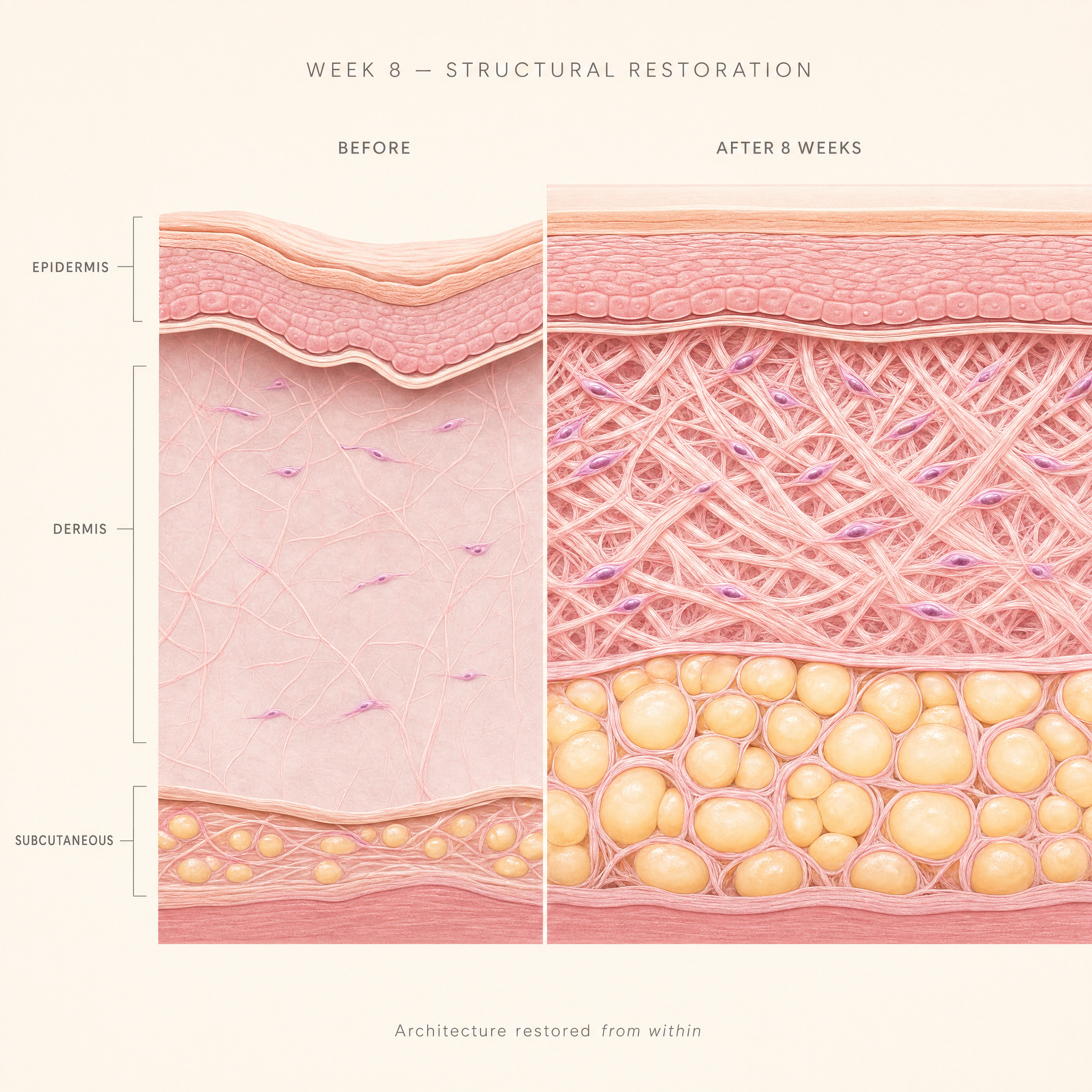
Week 8 mechanism diagram
Week 08 · Restoration

Architecture rebuilt from within

Dense collagen network. Restored subcutaneous cushion. Top-quartile responders show +8.4% measured volume gain on FOITS imaging. The architecture is back, not injected. Rebuilt.

Real Results From Real Women
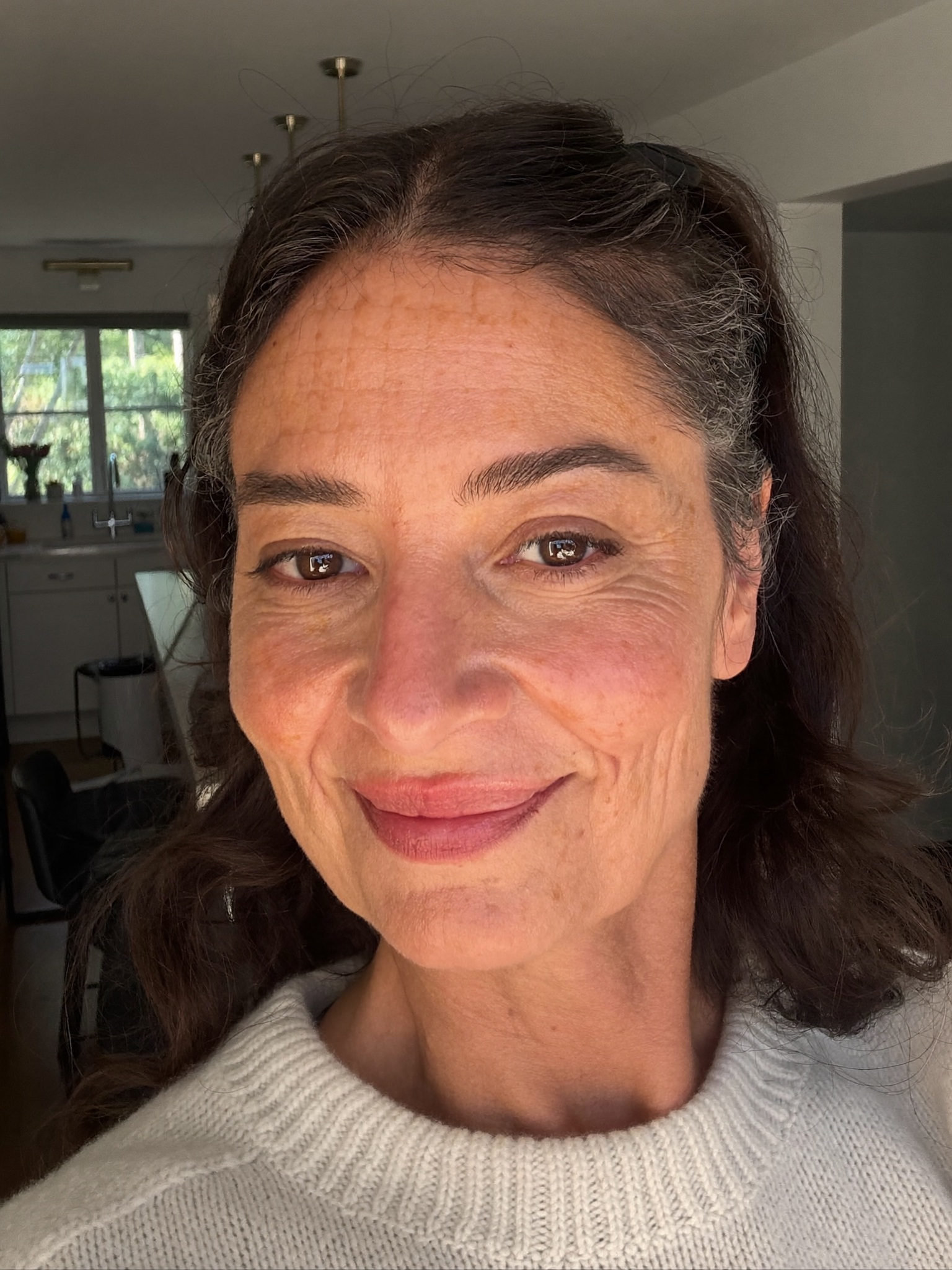
Marisol K., age 49
★★★★★
"I'd been getting filler twice a year for four years. By week 5 of Aumora I cancelled my next appointment. My husband said I look rested for the first time since 2022. Saved $1,800 a year and my actual face came back."
Marisol K. · Age 49
Jennifer T., age 44
★★★★★
"After Wegovy I lost my whole face. I look like myself again. The under-eye hollowness was the worst part and that came back first."
Jennifer T. · Age 44
Diana M., age 53
★★★★★
"I'm 53 and perimenopause hit my face overnight. Six weeks in and the cheek hollows I'd been hiding with bronzer for two years are filling in naturally. This is the only thing that worked."
Diana M. · Age 53
Priya S., age 46
★★★★★
"My derm wanted to start me on biostimulators at $3,200 a treatment. I tried Aumora instead. Eight weeks later she asked who did my work."
Priya S. · Age 46

You've Been Patient Long Enough.

30,000+ women stopped refilling and started rebuilding. Try Aumora risk-free for 60 days.

Get The Aumora Protocol
Free Shipping 60-Day Money-Back 30,000+ Sold